What is a traffic controller
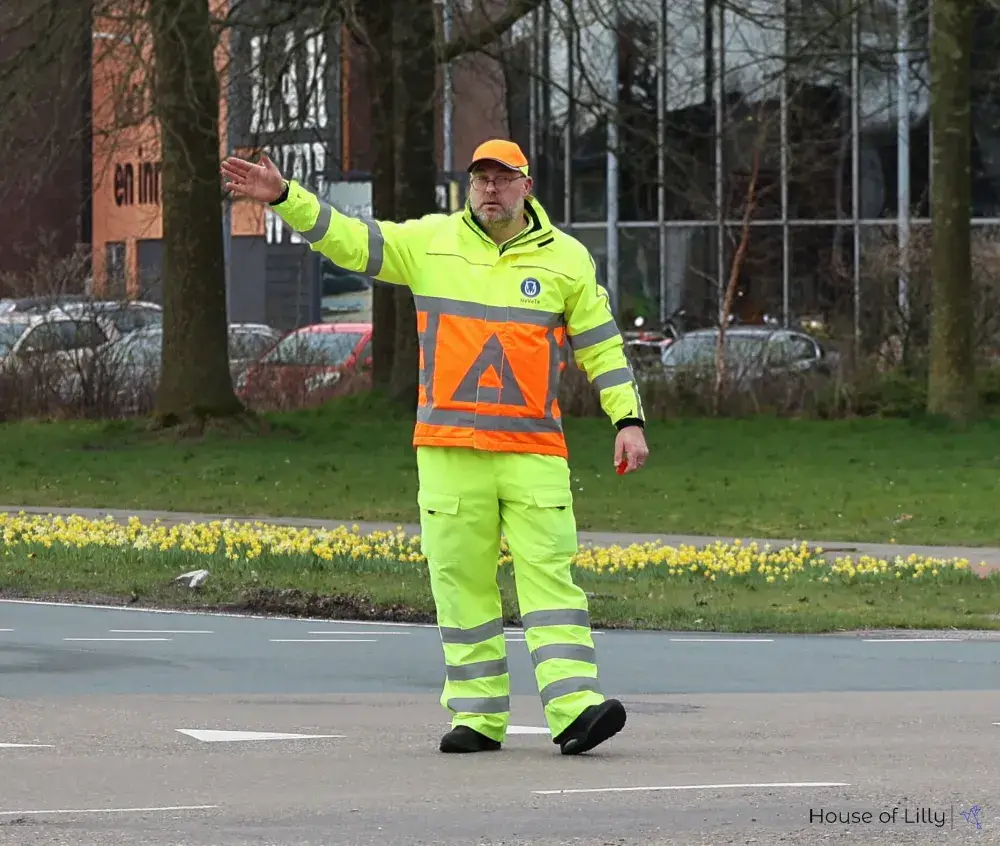
Becoming a traffic controller: what do you learn on this course?
Are you looking for a practical course to become a traffic controller (verkeersregelaar)? Then you have come to the right place. At NeVeTe, you learn to direct traffic safely and professionally in 3 days. You learn to give clear instructions (aanwijzingen) and to deal with different road users. You complete the course with the official traffic controller exam of Stichting Verkeersregelaars Nederland (SVNL). After that, you or your employer apply for the appointment card (aanstellingspas). The card is valid for 5 years. We explain how this works and help you through the process.
What does a traffic controller do?
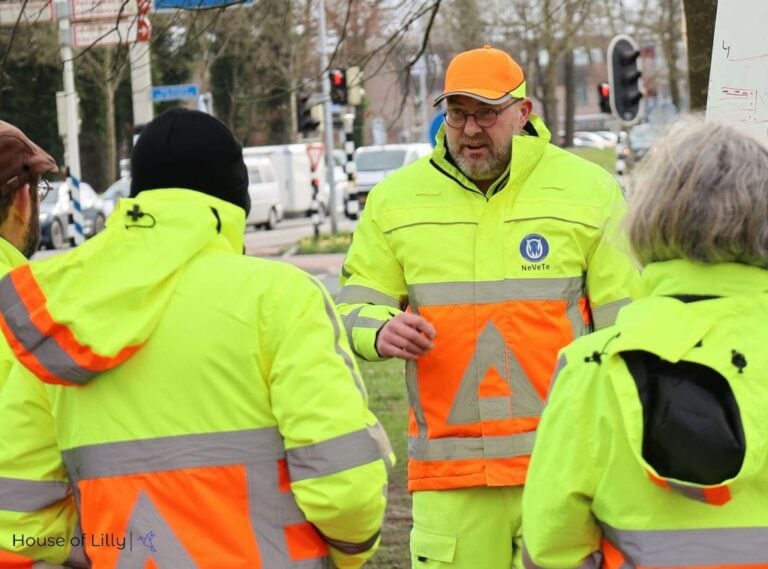
When the normal traffic situation changes temporarily, a traffic controller makes sure that traffic keeps moving safely and as smoothly as possible. Think of roadworks, events, diversions or road closures. You give instructions to drivers, cyclists and other road users and keep an overview of the whole situation. Road safety always comes first: you assess situations quickly, think ahead and communicate clearly.
You regularly work together with colleagues, road authorities, contractors, emergency services and event organisers. For many road users, you are the visible point of contact on the street. No two working days are the same. That is why this course teaches you not only how to give instructions, but above all how to recognise and assess traffic situations and act safely.
Event traffic controller or professional traffic controller?
This course trains you to become a professional traffic controller (beroepsverkeersregelaar). That is different from an event traffic controller (evenementenverkeersregelaar), and the difference matters if you are deployed at an event.
An event traffic controller is a volunteer. You only carry out the traffic tasks that the event organisation has set for your post. For this, you complete an online instruction at verkeersregelaarsexamen.nl; you do not need an account. Insurance is arranged through the organiser or the municipality where the event takes place.
A professional traffic controller has been professionally trained and has wider powers. You may only work for the employer or employers named on your appointment card, and you are insured through your employer.
There is also the job of transport escort (transportbegeleider). A transport escort accompanies long, high or wide loads, also known as abnormal loads. A transport escort has wider powers than a professional traffic controller. This course trains you as a professional traffic controller, not as a transport escort.
If you are hired as a professional traffic controller for an event, the organiser must have a business agreement about this with the employer named on your card. If there is no such agreement, you can still take part as a volunteer; you then complete the same online instruction. In that role, you may not use the wider powers of a professional traffic controller.
This distinction is also laid down in law. People aged 16 and over can be appointed as traffic controllers at events. The appointment is for a single event or for a continuous period of no more than twelve months, and you work under the direct supervision of the police. If you are under 18, you are only deployed on roads where traffic generally does not go faster than 50 km/h, and only if there is enough street lighting in darkness or poor visibility. To be appointed (aanstelling) as a professional traffic controller, you must be at least 18 and have passed the theory and practical exams. You have wider powers, but a restriction may be attached to your appointment. Always carry your appointment card with you while you work.
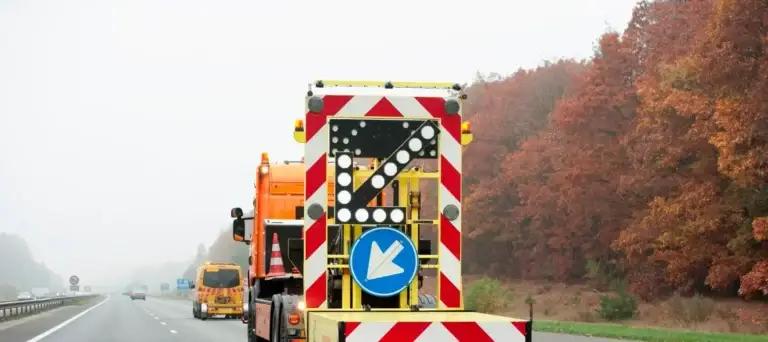
Please note: as a traffic controller, you may not be deployed alongside a heavy-duty incident vehicle (verzwaarde actiewagen) fitted with a crash cushion (botsabsorber). This is not permitted.
Why take this course at NeVeTe?
- Become a traffic controller in 3 days, exam included
- SVNL theory and practical exams included in the price
- More than 25 years of experience in training professional traffic controllers
- Taught by Rick Mulders
- Help with your appointment card application (valid for 5 years)
Official sources: Event traffic controller and professional traffic controller (SVNL) · Different types of role (SVNL)
Important
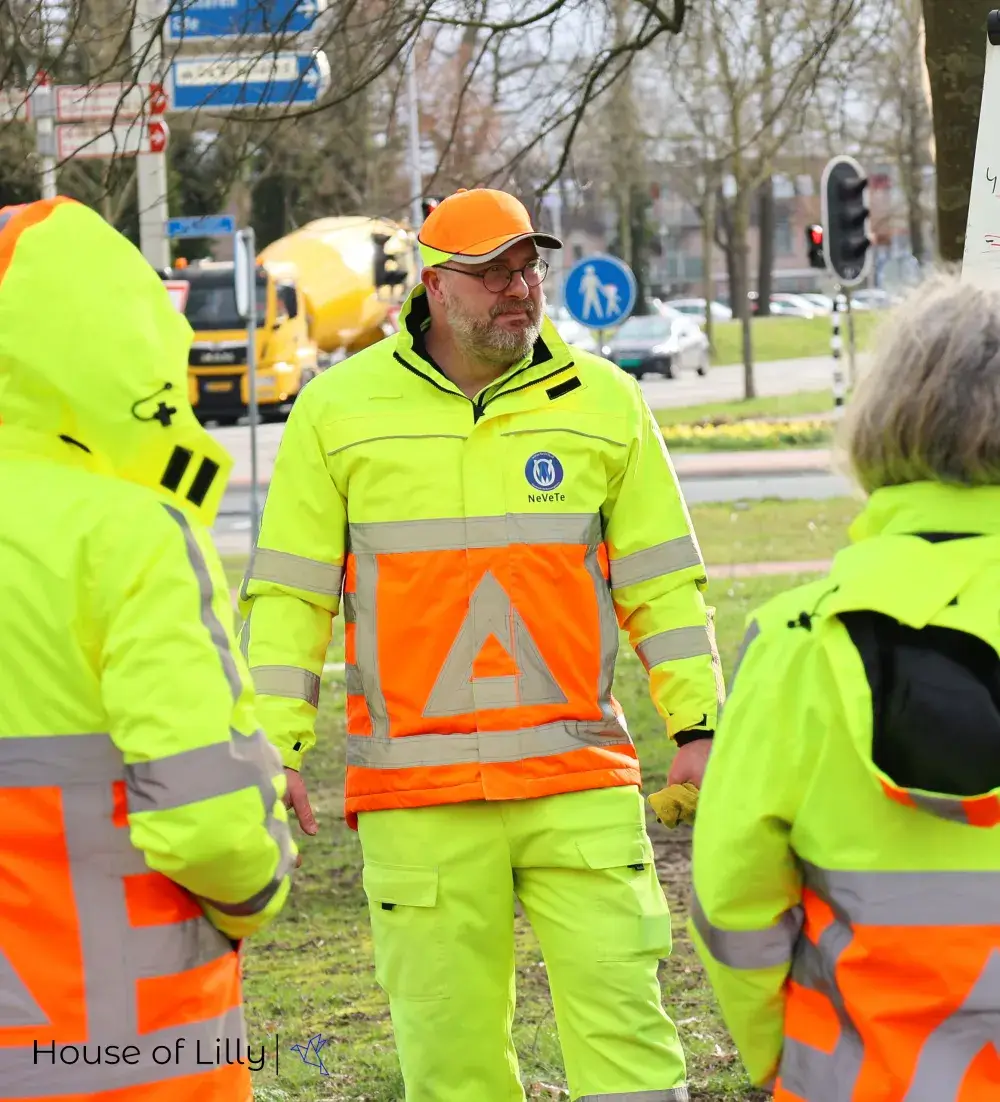
Important: lessons in Dutch, theory exam also in English
The theory and practical lessons are taught in Dutch. The lessons are not taught in English. The theory exam can also be taken in English, both written and oral, at no extra cost. The practical exam is taken in Dutch.
Language support
If you are learning Dutch, you are very welcome on our course. If you have any questions about the language, please contact us before you enrol.
If your Dutch is not yet good enough, you may bring a family member or acquaintance who speaks both Dutch and English to the lessons. You decide who you bring. During the lessons, this person can pass on what the trainer explains to you in English.
This person may also come with you to the theory exam (theorie-examen) and the practical exam (praktijkexamen) and translate for you, if you need it. You are responsible for your own translation and interpreter. The theory exam can also be taken in English, both written and oral, at no extra cost. The practical exam is taken in Dutch.
In that case, the practical lesson can also take place at a junction with less traffic, so the trainer can explain things to you more calmly.
Use the examples below to practise the Dutch instructions you will hear during the practical lessons:
- Fietsers stoppen – Stop the cyclists.
- Fietsers oversteken – Let the cyclists cross.
- Voetgangers stoppen – Stop the pedestrians.
- Voetgangers oversteken – Let the pedestrians cross.
Enrolment
After you enrol, you will receive a confirmation (bevestiging). It arrives within 24 hours, except at weekends. The confirmation states the date, the location and the times.
For open-enrolment courses, please bring your own lunch. Show a valid ID at the exam. Wear suitable clothing and shoes. Coffee and tea are included. You will receive a notepad and a pen. Traffic controller clothing (verkeersregelaarskleding) is provided on loan.
We communicate with you in Dutch. If you call us, Sussanne will answer the phone and speak Dutch. So please ask someone who speaks Dutch to make the call.
You are also welcome to email us in English: [email protected]. We read your message and reply in Dutch. That way, there are no misunderstandings.
Who is it for
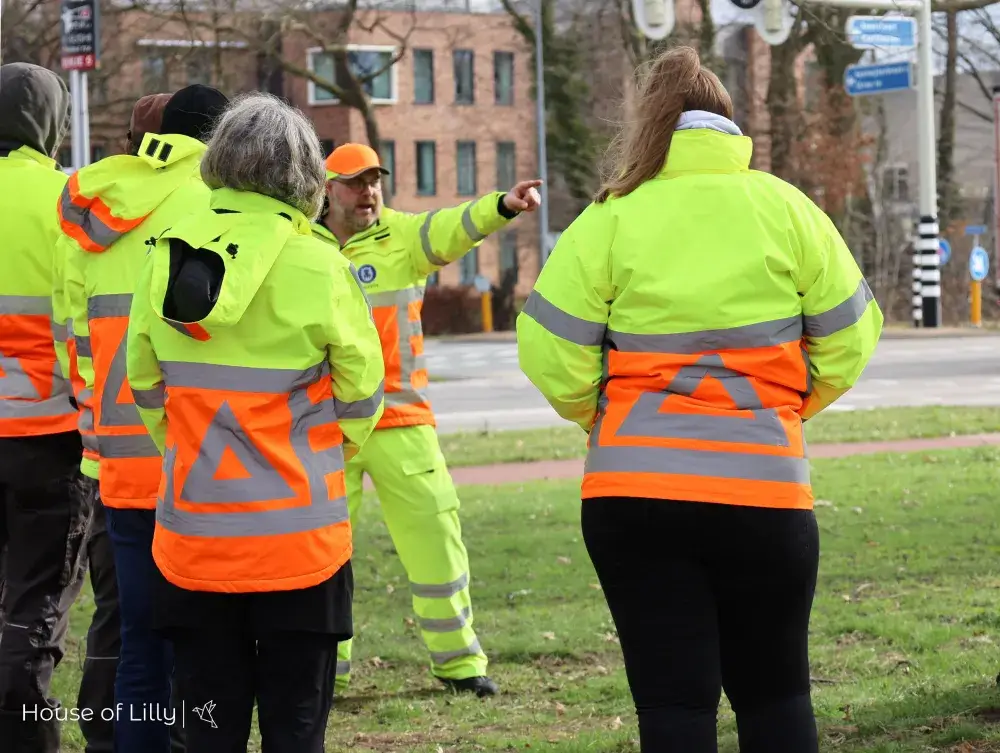
Who is this traffic controller course for?
Anyone who wants to become a traffic controller (verkeersregelaar) as a profession can take this course. It is also suitable for people who deal with road safety in their work. You must be at least 18; this is the legal minimum age for an appointment (aanstelling) as a professional traffic controller. Whether you are new to the job or already experienced, you learn what you need to work safely, independently and professionally on the street.
- Anyone aged 18 or over
- Parks and road maintenance teams (groen en grijs)
- Municipalities and provinces (provincie)
- Security staff
- Schools and events
- Self-employed workers (zzp’er) who want to become traffic controllers
One phone call is enough – we are happy to help
Not sure whether this course is right for you? Call us on 0545-842880. Sussanne answers the phone and speaks Dutch, so please ask someone who speaks Dutch to make the call. You are also welcome to email us in English: [email protected]. We read your message and reply in Dutch.
This course is professional training
If you only want to help out as a volunteer at an event, the online instruction for event traffic controllers (evenementenverkeersregelaar) is often enough. If you want to become a traffic controller as a profession, with wider powers and an appointment card (aanstellingspas), take this 3-day course.
In-company
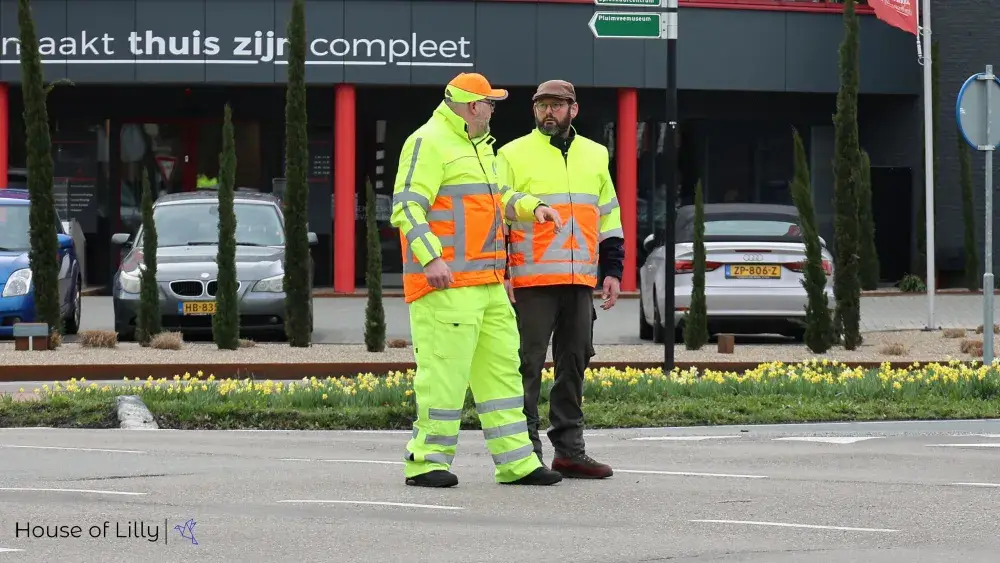
In-company traffic controller course
Would you like to train several employees as traffic controllers at the same time? NeVeTe comes to you. With in-company training, your team takes the course at your premises, on days that you choose.
For large groups, the training is usually held at your organisation’s premises. This allows us to split the days. With 6 or more participants, we organise the training at your location.
Tailored to your work
We adapt the examples and exercises to the work your team does: roadworks, events, municipal supervision or security. With in-company training, the lesson times may differ from open-enrolment courses. Sussanne plans the days together with you.
What is included
- Training at your premises or at a location of your choice
- Dates that fit your schedule, with split days if you wish
- SVNL theory and practical exams, included in the price
- More participants can join the theory lessons
- Practical exam in groups of up to 8, as required by SVNL
- Taught by Rick Mulders, who has more than 25 years of experience in training professional traffic controllers
A quote tailored to you
Call us on 0545-842880 or request a quote. We will discuss the number of participants, the location and the dates with you. If your group has more than 8 people, we split the practical exam into several groups.
Request a quote →
The lesson days
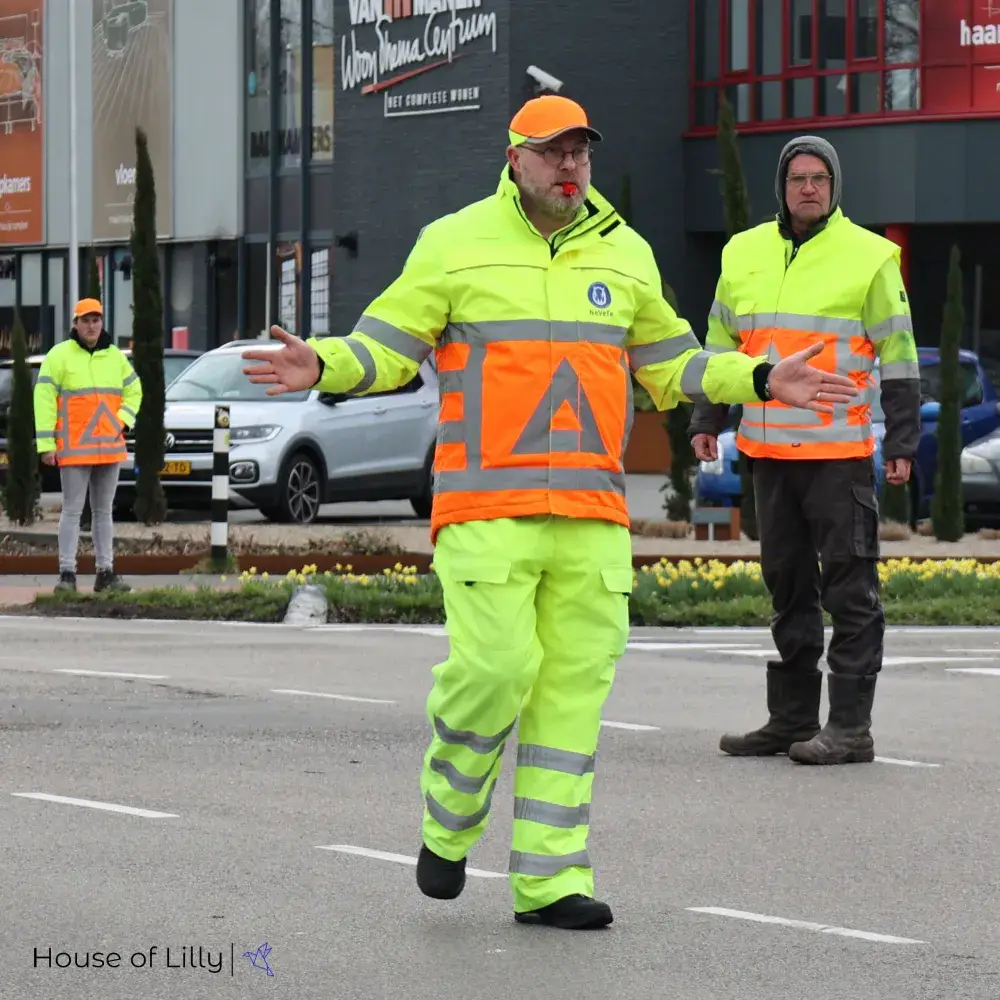
Traffic controller course in 3 days
This is how the 3-day traffic controller course runs on open-enrolment courses. For in-company training, the times may differ.
Day 1 · theory
- 09.00 · start of the theory day
- 15.00 · end of the theory day
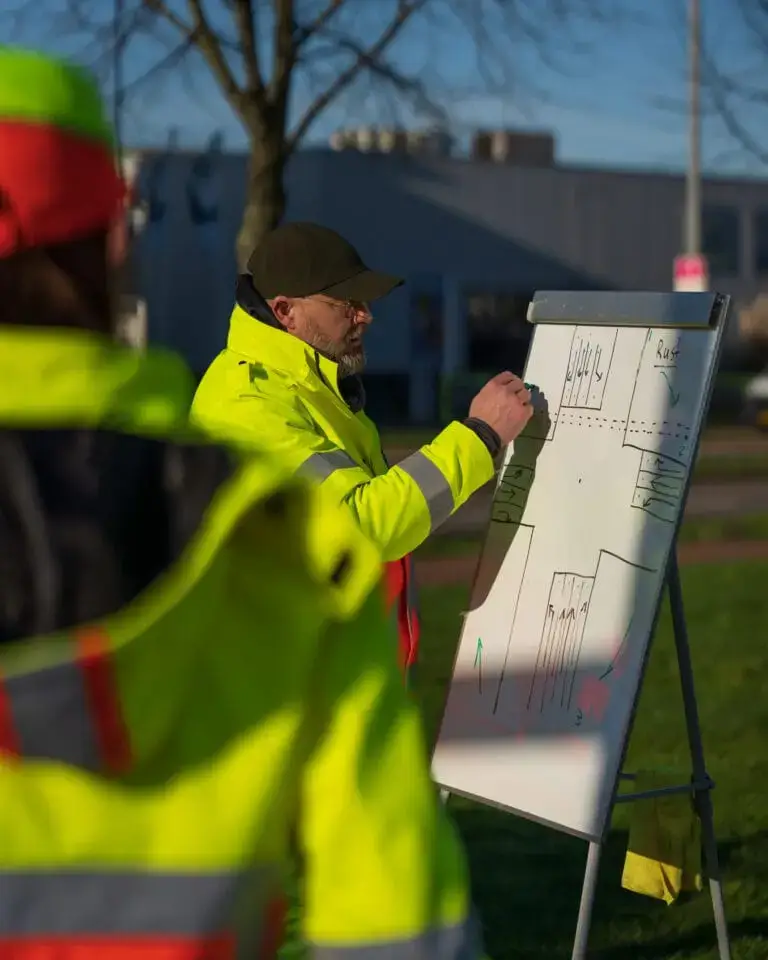
The first day is the theory lesson. You learn about road safety and your responsibilities as a traffic controller. You also learn how to give instructions, communicate with road users and assess traffic situations safely. We use familiar examples from practice.
More participants can join the theory lessons. There is no maximum for the theory day.
Day 2 · practice at the junction
- 09.00 · start of the practical day
- 15.00 · end of the practical day
On the second day, you work outside. Together with the other participants, you practise at a junction. You learn to direct different traffic flows safely. Under Rick’s guidance, you practise situations you will later face as a traffic controller. This way, you gain not only knowledge but also confidence and experience.
Day 3 · finishing the practical training and the exams
- 09.00 · start of the third lesson day
- 13.00 · start of the exams
- 15.00 or 16.00 · end of the day (depending on the exam)
On the third day, you finish the practical training. At 13.00, the official SVNL exam starts: first the theory exam, then the practical exam. In the practical exam, you direct traffic at a designated junction for fifteen minutes. Under SVNL rules, a practical exam group has a maximum of 8 candidates.
Coffee and tea are provided. You will receive a notepad and a pen. On open-enrolment courses, please bring your own lunch. For an in-company group, we can arrange lunch together.
Your trainer
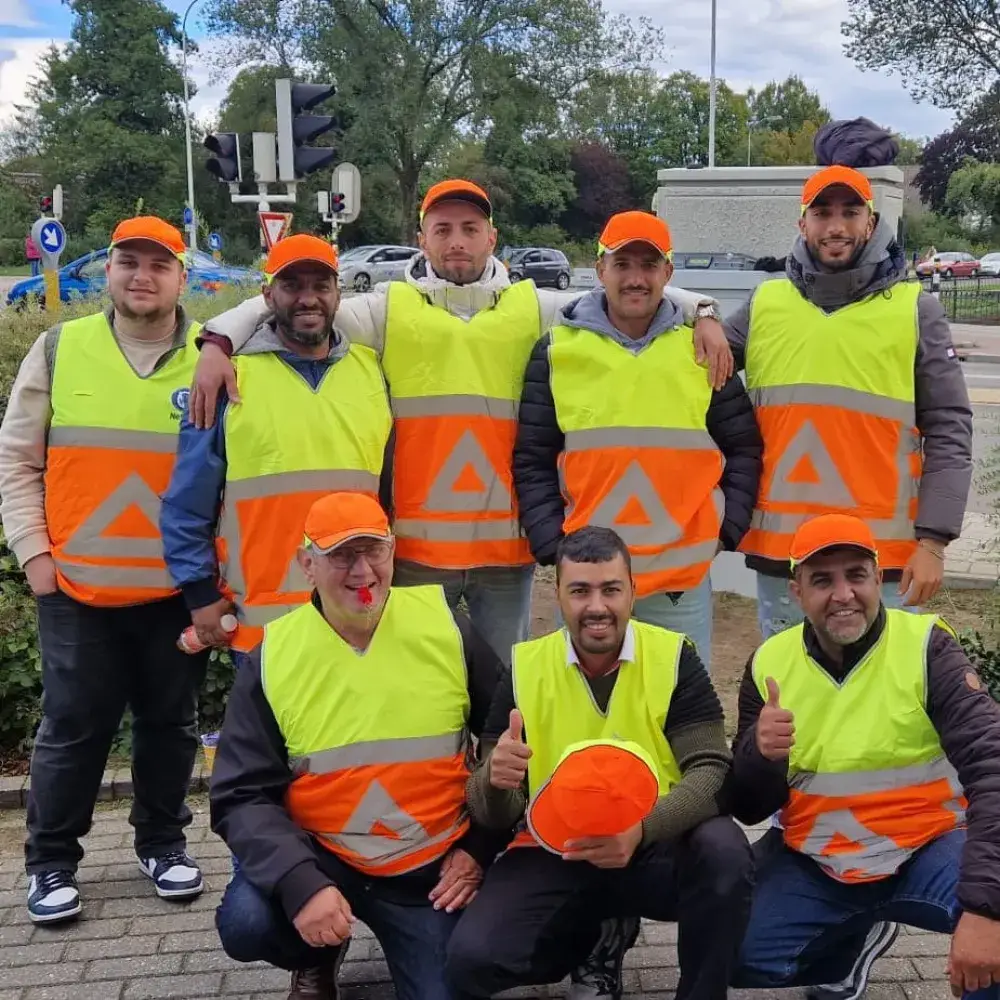
Your trainer, Rick Mulders
Rick Mulders is the trainer on the traffic controller course. He has more than 25 years of experience in training professional traffic controllers (beroepsverkeersregelaars). He started out with traffic controller training himself. What began on the street grew into a profession centred on traffic, safety and training people. To date, he has trained more than 17,000 traffic controllers. He is one of the most experienced and longest-serving trainers in the field.
His strength is not only his knowledge, but the way he passes it on. He speaks plainly, gets straight to the point and always starts from practice. He reads people well, has a good sense of humour and a sharp eye. He makes complex traffic situations easy to understand. That is also the foundation of NeVeTe: not a standard story learned from a book, but a course in which you understand why you do something and what it means on the street.
Rick is still active in the field. That is why the course content matches real practice.
Read more (in Dutch) →
- More than 25 years of experience in training professional traffic controllers
- Has trained more than 17,000 traffic controllers
- High pass rate: 99%
- His own, practice-based teaching style
- Direct and clear
- A good communicator
- Brings people together
- Loyal
- Always ready to help when needed
- Also works well with candidates going through a difficult time or in a special situation
- Still active in traffic and safety practice
- Practises Kyokushin karate
NeVeTe is known for its own way of teaching. It is a bit like having lessons from that one eccentric uncle who always has a surprise up his sleeve. This has become something that sets NeVeTe apart, and it leads to noticeably better results.
“Rick sees it as his personal mission to help even those students succeed who have lost their way with traditional teaching methods.”
He does everything he can to keep learning lively and to help students succeed. After all, why should learning be boring?
Theory lessons from Ben Donkers
The theory lessons are often taught by Ben Donkers. Ben works for the police in Nijmegen and chairs the delegated committee (gedelegeerd comité) of Stichting Verkeersregelaars Nederland (SVNL). Together with Rob de Vogel, he draws up the layout of the exams and the exam guidelines. Ben has been teaching at NeVeTe for years, and we are proud to have him on our team. So you learn the theory from someone who knows exactly what is asked in the exam.
Practical lessons from Gerrit Wolf
The practical lessons at the junction are often taught by Gerrit Wolf. Gerrit also did his traffic controller training at NeVeTe. After that, he and Rick became practically inseparable. That close friendship led to the question of whether Gerrit would like to teach as well. He did, and he is now a permanent part of the team. He knows better than anyone what it feels like to stand at the junction as a participant.
A close-knit team
Together, Rick, Ben and Gerrit form a strong team. Now and then, Jan Pouls from Limburg also helps out. He brings a warm Limburg touch to the lessons we give at our clients’ premises.
Exam
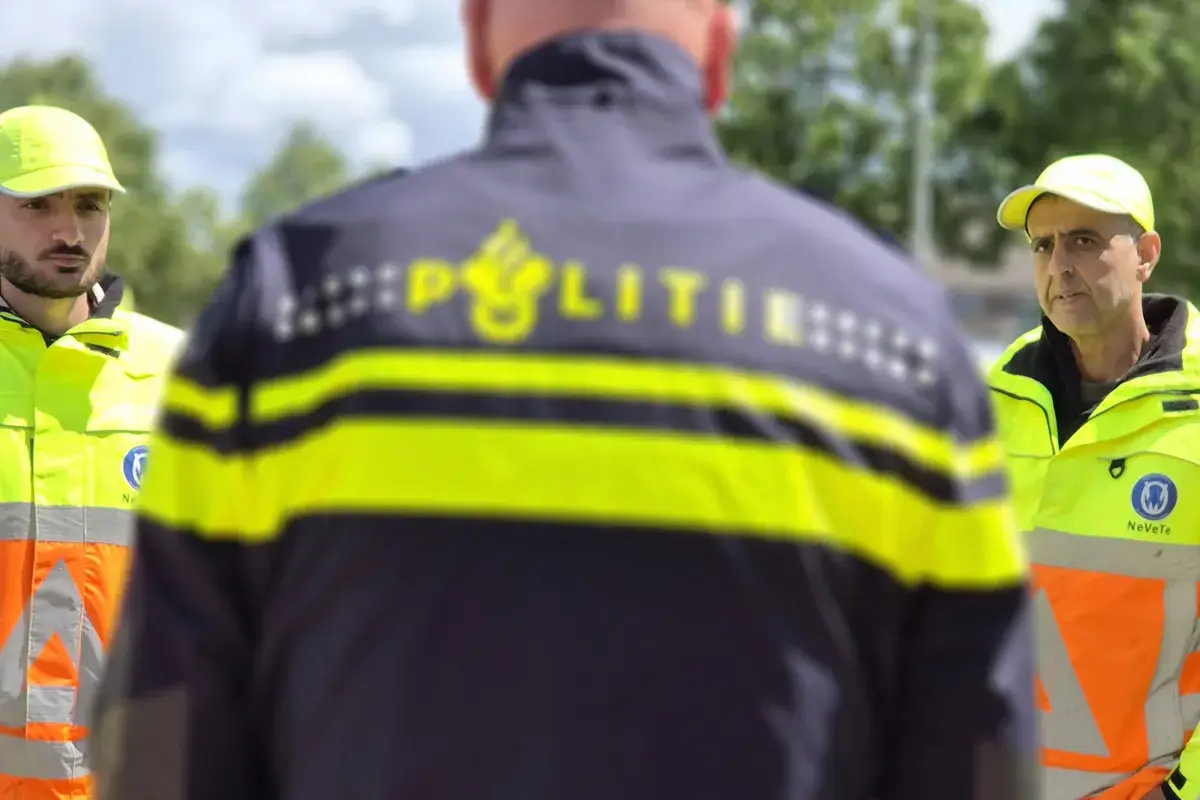
The traffic controller exam (examen verkeersregelaar)
You complete the traffic controller course with two official exams of Stichting Verkeersregelaars Nederland (SVNL): the theory exam (theorie-examen) and the practical exam (praktijkexamen). Both exams are included in the price of € 535,- per person (including exam fees, excl. VAT). You can take the theory exam in English, both written and oral, at no extra cost. The practical exam is taken in Dutch. At NeVeTe, 99% of participants pass.
Part 1: Theory exam (theorie-examen)
The theory exam consists of 35 multiple-choice questions. You can take it in writing (on paper) or orally, in English or in Dutch, at no extra cost. If you need it, you may also have an interpreter with you who translates for you. This can be a family member, such as your brother or sister, or an acquaintance who comes along to support you. You are responsible for your own translation and interpreter. To pass, you must answer at least 70% of the questions correctly. Under the Regeling verkeersregelaars 2009 (Staatscourant 2009), the professional training consists of a theoretical and a practical part, each completed with an exam. You can only take the practical exam once you have passed the theory exam. More participants can join the theory lessons; there is no maximum.
Part 2: Practical exam (praktijkexamen)
In the practical exam, you direct traffic at a designated junction for fifteen minutes. On open-enrolment courses, the exam starts at 13.00 on the third lesson day. SVNL requires a practical exam group to have no more than 8 candidates. If the group is larger, for example on an in-company course, we hold the practical exam in several groups of up to 8 people.
First, you show a valid ID. An examiner and a police representative assess you. The criteria are set out in the Regeling verkeersregelaars 2009, for example safety and traffic flow, timely and official instructions, your position at the junction, your attitude, your understanding of traffic and how you respond to special situations. The exam takes place at a junction approved by SVNL. Wear suitable clothing and shoes. During the practical lesson and the practical exam, wear the prescribed jacket or vest.
How we prepare you
Over the three lesson days, you work on the theory and the practice with Rick Mulders, who has more than 25 years of experience in training professional traffic controllers. You practise at the junction, so you know what is expected of you in the practical exam. The lessons are taught in Dutch. The theory exam can also be taken in English, both written and oral, at no extra cost. The practical exam is taken in Dutch. If your Dutch is not good enough to follow the lessons, you may bring an interpreter: a family member, such as your brother or sister, or an acquaintance who comes with you. This person can be with you during the lessons and, if you need it, at the theory exam and the practical exam, and translate for you. You are responsible for your own translation and interpreter.
After the exam
If you pass, you receive a certificate (getuigschrift) for the theory and practical exams. The police representative adds a validation code (waarmerk) to it. A unique code for your appointment card application is then ready for you on Aanstellingspas.nl. On the day of the application, the certificate must not be more than six months old.
If you do not pass or disagree with the result
If you do not pass, you can retake the exam through NeVeTe. There is no limit to the number of attempts. If you disagree with the result, you can lodge an objection with SVNL within 8 weeks.
Official sources: Professional traffic controller exams (SVNL) · Traffic controller exam guidelines (SVNL, July 2026)
Practical information
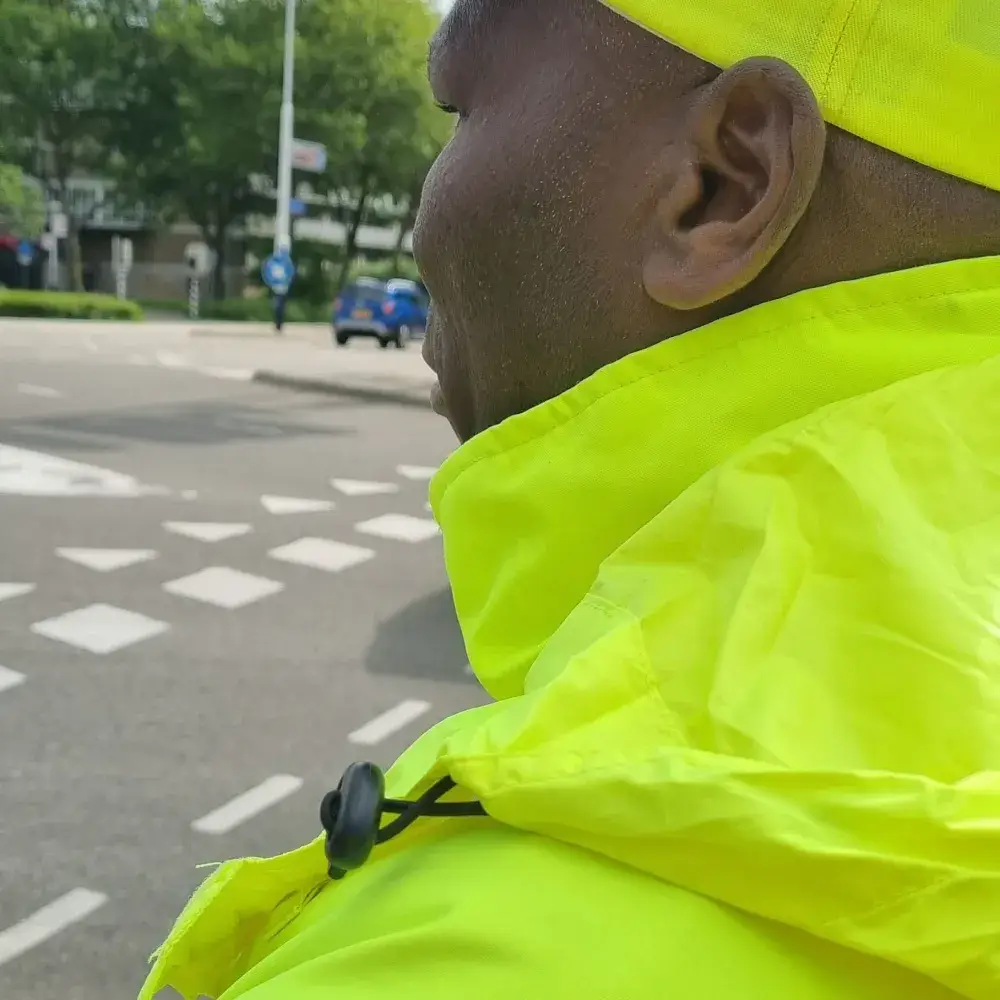
Practical information about the traffic controller course and costs
- Cost of the traffic controller training: € 535,- per person (including exam fees, excl. VAT)
- SVNL theory and practical exams included; theory exam also in English at no extra cost
- Traffic controller training in 3 days
- After passing the exam, you or your employer apply for the appointment card (aanstellingspas); we help you with this (valid for 5 years)
On open-enrolment courses, you bring your own lunch. Coffee and tea, a notepad and a pen are included. Traffic controller clothing (verkeersregelaarskleding) is provided on loan. A clothing package is optionally available for € 30,-; please state your size when you enrol. On roadworks (werk in uitvoering), you wear fluorescent yellow trousers, especially in the evening and at night.
Appointment card (aanstellingspas)
You cannot work as a traffic controller without an appointment card. Wait until you have received the card before you start work. After the exam, you or your employer apply for the card. We explain how this works and help you. An appointment (aanstelling) is legally valid for 5 years. This applies to both a national appointment (landelijke aanstelling) and a municipal appointment (gemeentelijke aanstelling). Successful candidates receive a unique code via Aanstellingspas.nl; the card is applied for with this code.
Legal requirements for an appointment
The training, exam, appointment and equipment of traffic controllers are regulated in the Regeling verkeersregelaars 2009. To be appointed as a professional traffic controller, you must be at least 18. For the theory and practical exams, you need a certificate (getuigschrift) that is no more than six months old on the day of the application. You also need a certificate of conduct (VOG) that is no more than two months old on that day, and a written statement from your employer. The appointment is valid for five years and is granted by an appointment decision (aanstellingsbesluit). This decision may also restrict your powers. Always carry your appointment card with you while you work.
An appointment can be renewed for five years each time. For this, your employer must show in writing that you have regularly directed traffic in the same profession over the past year. You also need a new, up-to-date certificate of conduct (VOG). You can apply for a renewal up to six months after the previous appointment has ended. The competent authority can withdraw the appointment in writing, for example if information turns out to be incorrect, if you have endangered traffic while working (after a written opinion from the police), if you no longer do the work, or at your own request.
National or municipal appointment: what is the difference?
If your employer applies for the card, or you apply yourself as a self-employed worker (zzp’er), this is a national appointment (landelijke aanstelling). With it, you can work throughout the Netherlands. There is one important restriction: on motorways, you only work under the supervision of a Rijkswaterstaat road inspector (weginspecteur). For an employer, the process starts with registration on Aanstellingspas.nl. For national authorisation, your employer first submits proof of assignments (bewijs van opdrachten). This proof must show that the work is carried out in several non-neighbouring municipalities and is not limited to a single province (provincie). Examples are an invoice and proof of payment with the amounts made unreadable, a signed work order, a signed letter from the employer or a signed contract. Rijkswaterstaat reviews these documents. After approval, the card can be applied for. If your employer cannot yet provide such proof, the work falls under a municipal appointment (gemeentelijke aanstelling). In that case, your employer contacts the municipality where the work will take place. That municipality can apply for the card via Aanstellingspas.nl.
If a municipality applies for the card, you receive a municipal appointment. This appointment applies in the municipality named on your card and, as a rule, in all municipalities under the same mandate (mandaat). The name of the municipality is on the card. The municipality may also add its own extra restriction. As the road authority, the municipality makes the appointment itself; SVNL produces the card.
If you are a transport escort (transportbegeleider), this restriction is stated separately on the card.
What you can and cannot do
If a competent authority has appointed you, road users must follow your traffic instructions. This is set out in Article 12 of the Wegenverkeerswet 1994. You may only give these instructions in the interest of road safety, protecting the road and keeping it usable, the flow of traffic, or for studies authorised by the minister. The same law also allows detailed rules to be made on the training, exam, appointment, appointment card and equipment of traffic controllers.
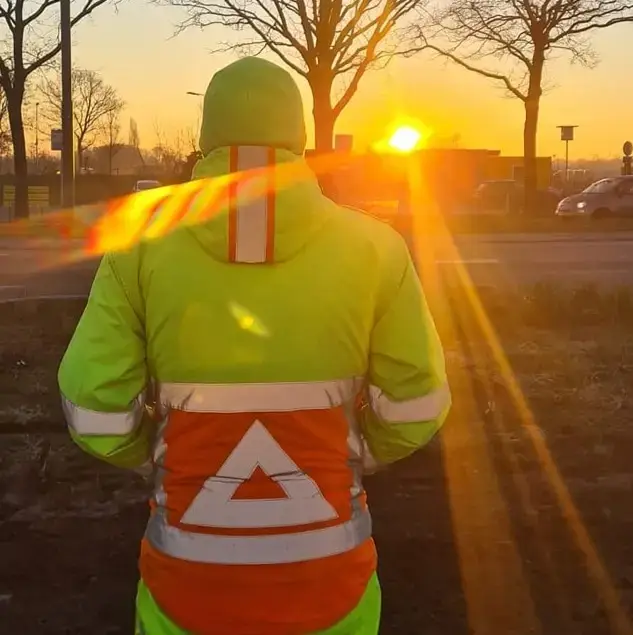
Under the RVV 1990, road users must follow the instructions you give verbally or by signal, provided you are authorised to do so and recognisable in that capacity. This applies while you are working, and also during practical lessons and the practical exam, as long as you wear the prescribed clothing. For signals, you use the official instruction signals (aanwijzingen) as far as possible. Your instructions take precedence over traffic signs and traffic rules.
A restriction on your powers may be attached to your appointment; it will be stated on your card. As a traffic controller, you may not be deployed alongside a heavy-duty incident vehicle (verzwaarde actiewagen) fitted with a crash cushion (botsabsorber). This is not permitted.
What is needed for a municipal application?
For a new municipal card, the municipality needs, among other things, your 9-digit validation code (waarmerk) and a passport photo. On the day of the application, the certificate must not be more than six months old; if it is older, you will have to retake the exam. By law, the certificate of conduct (VOG) must not be more than two months old on the day of the application. For a municipal application, the municipality checks the VOG itself; it does not need to be uploaded.
For a renewal or a duplicate card (duplicaat; in case of loss or damage), you preferably need your current card number and a passport photo. For a conversion (omzetting) or an additional employer registration (bijplaatsing), a completed employee declaration (werknemersverklaring) is added. If the card is renewed at the same time, a VOG is also required. For an exemption (vrijstelling), your card number and year of birth are enough.
What is needed for a national application?
A national application is made via Aanstellingspas.nl. Your employer applies, or you apply yourself if you are self-employed. For a new card, you need your 9-digit validation code (waarmerk), a passport photo and a certificate of conduct (VOG). On the day of the application, the certificate must not be more than six months old; otherwise, you will have to retake the exam. By law, the VOG must not be more than two months old on that day.
For a renewal, you preferably need your current card number, a passport photo and a VOG. For a duplicate card (duplicaat), a declaration of loss or a police report is added. For a conversion (omzetting) or an additional employer registration (bijplaatsing), you need a completed employee declaration (werknemersverklaring) and a passport photo. If the card is renewed at the same time, a VOG is added as well. For an exemption (vrijstelling), your card number and year of birth are enough.
Changing employer
If you move to another employer, you hand your appointment card in to your old employer. Your new employer can transfer the appointment to its own name via Aanstellingspas.nl. The old card number is not needed for this.
Working for more than one employer
If you work for more than one employer, your other employer can apply for an additional employer registration (bijplaatsing). That employer is then added to your existing card. This way, you comply with the rule: as a professional traffic controller, you may only work for the employers named on your card.
If an application is rejected
An application can be rejected in two ways. Sometimes the file is not yet complete; the application is then sent back to the account with the reason, and the missing documents can be submitted later using a correction option. If the application is rejected definitively, the requirements have not been met, for example when a renewal is requested without a valid card. In that case, the application fee is not refunded, because it is charged mainly for processing the application, not just for the card itself.
If you stop working as a professional traffic controller
If you stop working as a professional traffic controller yourself, you hand your appointment card in to your employer. The employer can then have the card cancelled.
If your appointment card is taken from you
If your employer takes the card from you, they can report the card number, your initials, surname and date of birth by email to [email protected]. The card is then cancelled. The card can be destroyed or sent to: Verkeerscentrum Nederland, Postbus 1500, 4700 BM Roosendaal.
If your card is taken from you, you can also lodge a formal objection. You address your objection to Verkeerscentrum Nederland (VCNL) and send it by email to [email protected]. They make sure the objection is handled by the right organisation. If you lodge a formal objection, the police will be asked for a report.
Who supervises, and how is your appointment checked?
The police supervise all traffic controllers. The police can check whether an appointment is valid using SVNL Check, among other tools. This app is for the police only. The appointment card of a professional traffic controller has a QR code that can be scanned for this purpose. The validity of an old, yellow card can be checked with SVNL. An event traffic controller does not have a card; their validity can be checked by name and date of birth.
Exemption (vrijstelling) or dispensation (ontheffing)
An exemption (vrijstelling) is a separate permit that allows you to use the road in special situations. The conditions stated on the document apply. A dispensation (ontheffing) is the same kind of permit; both names are used. Your employer can apply for an exemption via Aanstellingspas.nl. Under the new rules, the exemption is valid for as long as your appointment card. Within these conditions, the exemption applies on all roads in the Netherlands.
With an exemption, you may park where there are no parking rules, as long as it is safe. You cannot use the exemption where parking is prohibited or in a paid parking space. If there is a normal or paid parking space nearby, you park there.
Working safely under CROW 96b
In this training, you learn to assess a situation yourself. This also applies to roadworks (werk in uitvoering): can you stand safely, and can traffic pass the work area safely? You practise how the RVV 1990 and the Wegenverkeerswet 1994 work in practice. You also practise communicating clearly and calming things down when tension rises. And you learn how to work with colleagues using a two-way radio (portofoon).
Do you work at the roadside with a team and are you looking for the course “Veilig werken langs de weg” (working safely at the roadside)? Then take a look at part 1 (deel 1; roads up to 60 km/h) or read the explanation of CROW 96b first.
On roadworks, under CROW publication 96b, you are only an addition to a road closure or a temporary traffic measure. It is first checked whether the work can be done without a traffic controller. You are deployed where your presence clearly contributes to safety, traffic flow or accessibility. You are not deployed on motorways for this kind of work.
Traffic coming towards you and passing you does not go faster than 50 kilometres per hour. You are not deployed on slippery surfaces or with mobile closures. You work from a safe position, with a good view and an escape route. How long you can direct traffic in one go depends on how busy it is: the busier the traffic, the shorter the shift. In darkness or poor visibility, you wear the jacket together with yellow high-visibility trousers.
After the training
After the training, you can take a refresher training (herhalingstraining). No exam is needed; you receive a certificate of attendance. Some refresher training sessions can be extended with dynamic traffic control (dynamisch regelen).
Official sources: Regeling verkeersregelaars 2009 (Staatscourant) · Wegenverkeerswet 1994, Article 12 · RVV 1990, Article 82 · RVV 1990, Article 84 · Aanstellingspas.nl · National appointment (SVNL) · Municipal appointment (SVNL) · Proof of assignments (bewijs van opdrachten, SVNL) · Requirements for a national application (SVNL) · CROW publication 96b, roadworks guidelines
- Course dates and enrolment: View the current dates of the traffic controller course and book your place straight away. View course dates →
- Lesson days: day 1 theory, day 2 practice at the junction, day 3 finishing the practical training and the exams. For in-company training, the times may differ.
- Traffic controller exam: Theory: 35 multiple-choice questions, at least 70% correct. Practical: directing traffic at a junction for fifteen minutes, with up to 8 candidates per group. The theory exam can also be taken in English, at no extra cost; the practical exam is in Dutch.
- Personal advice: Do you have a question about the course, the exam or the appointment card? Sussanne will be happy to help. Call 0545-842880 →
- View course dates and enrol →